Buying Property in Parents' Name in India: Complete Tax and Legal Guide
Purchasing property is one of the most significant financial decisions most people make. But when the registered owner is someone else — especially your parents — the outcome isn’t always straightforward. Many buyers register property in their parents’ name for good reasons, but every choice has consequences you should understand before signing the deed.
Let’s break down what happens, common myths, legal facts, and smarter alternatives for lasting peace of mind.
Why Some People Buy Property in Their Parents’ Name
Many well-meaning buyers register property in their parents’ names because they believe it solves specific problems:
- Financial Security for Aging Parents: You want your parents to have a financial asset that belongs to them — especially in retirement age.
- Residents Abroad or Working Elsewhere: If you live in another state or overseas, having the property in your parents’ name may feel more practical for managing it locally.
- Restrictions on Land Ownership (like Agricultural Land): Certain types of land — especially agricultural land — can’t be directly purchased by NRIs. So, people register it in parents’ names who are Indian residents.
All these reasons seem sensible — but there’s a catch most buyers miss until it’s too late.
The Legal Reality Most Buyers Don’t Realize
Here’s the key truth:
👉 Ownership is defined by who is registered on the sale deed — not who paid the money.
If the sale deed lists your parents as owners, the law treats your parents as the legal owners — even if you funded the purchase.
And when ownership changes due to death, the rules of inheritance — not intent — decide what happens next.
Verify before you buy — in any name
Whoever the buyer is, JaaGa audits the property's title, ownership and encumbrances before you pay.
Verify Before You Buy →What Happens After Your Parents Pass Away?
Once your parents pass away, the property becomes part of their estate. That means:
- It is subject to succession law
- It is distributed among legal heirs (including all children, and possibly spouse)
- Your sibling(s) may have an equal legal claim — even if you paid for the property
Most buyers don’t think about this at the time of purchase — and it often leads to disputes later.
Common Mistakes People Try That Don’t Work
❌ Attempting to Add a Special Clause in the Sale Deed
Some people try to include wording like “this property belongs to the buyer even though parents are owners.” But legally, that doesn’t change ownership. Courts look at the names on the sale deed — not subjective clauses.
❌ Relying Only on a Will
Yes — your parents can make a Will specifying who gets the property. …but:
- Wills can be challenged in court
- Other heirs may dispute the Will
- Legal battles can delay transfer for years
So, while a Will is useful, it isn’t foolproof.
A Better Solution: Joint Ownership with “Right of Survivorship”
One of the smartest ways to protect everyone’s interest is to register the property as joint owners — typically:
- ✔ Parent + adult child
- ✔ With Right of Survivorship
Why This Helps
- Both names appear on the sale deed from day one
- If one owner passes away, ownership moves directly to the surviving owner
- Succession law doesn’t apply for that share
- Reduces chances of sibling disputes later
- Easier for loan eligibility and tax benefits
Even if you’re an NRI or living away, you can use a Power of Attorney (PoA) to complete registration on your behalf.
Tax & Loan Implications You Should Know
💰 Income Tax
- If the property is in parents’ name, rental income is taxed in parents’ hands
- If parents are in a lower tax bracket, that can be beneficial
🏦 Home Loan & Tax Benefits
- You cannot claim Section 80C or Section 24 benefits if the property isn’t in your name
- Lenders usually require the owner of the property to be the borrower
- Being a co-owner or co-applicant helps secure loan & tax benefits
Always consult a tax advisor before purchase.
Verify before you buy — in any name
Whoever the buyer is, JaaGa audits the property's title, ownership and encumbrances before you pay.
Verify Before You Buy →Smart Planning Tips Before You Decide
- ✔ Evaluate why you want the property in parents’ name
- ✔ Check succession laws in your state
- ✔ Consider joint registration with right of survivorship
- ✔ Speak to a lawyer before finalizing the deed
- ✔ Draft a Will if joint ownership isn’t chosen
- ✔ Plan loan & tax strategy up front
A small decision now can prevent major legal and emotional stress later.
Related Articles
Andhra Pradesh has reopened registration for about 9 lakh acres of freehold land. What changed, which lands are still barred, and how to check yours.
Current Telangana stamp duty, transfer duty and registration fee for sale, gift, GPA, mortgage, lease, partition, will and settlement deeds. Verified against IGRS.

Learn how to change the electricity bill name in Hyderabad, what documents TGSPDCL asks for, how the process works, and what to do if bills or arrears are pending.
Explore All Insights
Andhra Pradesh has reopened registration for about 9 lakh acres of freehold land. What changed, which lands are still barred, and how to check yours.
Download your Pattadar Passbook (ePPB) on Bhu Bharati, get a duplicate, fix errors and appeal a rejection. Step-by-step for Telangana landowners, 2026.
Telangana revised property market values from 5 June 2026. How to check the new land and apartment rates on the IGRS portal, how they are calculated, and what they mean for your stamp duty.
Current Telangana stamp duty, transfer duty and registration fee for sale, gift, GPA, mortgage, lease, partition, will and settlement deeds. Verified against IGRS.
.png?tr=w-600,q-80,f-auto)
What is Patta Chitta? How to view and download your Tamil Nadu Patta Chitta online at eservices.tn.gov.in — by patta number, name or survey number, plus how it differs from an EC.
%20What%20Every%20Homeowner%20Must%20Know%202026.png?tr=w-600,q-80,f-auto)
Andhra Pradesh is issuing QR-coded property cards under the NAKSHA drone + GIS survey. See what's on the card, the first 10 cities, the March 2027 timeline, and what to do now.

Bhoomi RTC and Pahani explained: what each field means, how to view records on the Karnataka portal, and how to download the digitally signed i-RTC banks accept.

Learn how to find and locate property ownership, verify the title chain, check the right records, and spot red flags before you buy property in India.
Learn how to change the electricity bill name in Hyderabad, what documents TGSPDCL asks for, how the process works, and what to do if bills or arrears are pending.

Learn how to check 22A prohibited land in Telangana, cross-check Bhu Bharati and registration records, and avoid buying property that cannot be registered.
.png?tr=w-600,q-80,f-auto)
தமிழ்நாட்டில் நிலம் வாங்குவது அல்லது விற்பது, அல்லது உங்கள் சொத்தின் மீதான உரிமையை உறுதிப்படுத்துவது ஒரு சிக்கலான செயல்முறையாக இருக்கலாம், குறிப்பாக சரியான ஆவணங்களைப் பற்றிய தெளிவு இல்லாதவர்களுக்கு. இந்த செயல்முறையின் மையத்தில் தமிழ்நாடு நில ஆவணங்கள் உள்ளன.
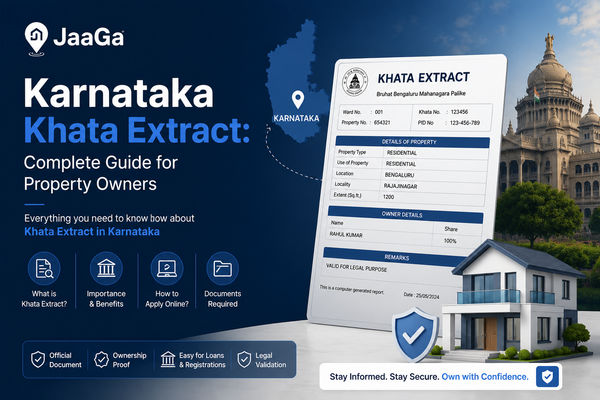
ಕರ್ನಾಟಕದಲ್ಲಿ ಆಸ್ತಿ ಮಾಲೀಕರಿಗೆ ಮತ್ತು ಆಸ್ತಿ ವ್ಯವಹಾರಗಳಲ್ಲಿ ತೊಡಗಿರುವವರಿಗೆ Khata Extract ಒಂದು ಅತ್ಯಗತ್ಯ ದಾಖಲೆಯಾಗಿದೆ. ಇದು ಆಸ್ತಿಯ ಮಾಲೀಕತ್ವ, ವಿವರಗಳು ಮತ್ತು ತೆರಿಗೆ ಪಾವತಿ ಸ್ಥಿತಿಯ ಬಗ್ಗೆ ನಿರ್ಣಾಯಕ ಮಾಹಿತಿಯನ್ನು ಒದಗಿಸುವ ಒಂದು ಪ್ರಮುಖ ಆಸ್ತಿ ದಾಖಲೆಯಾಗಿದೆ. JaaGa ದಂತಹ ವೇದಿಕೆಗಳು ನಿಮಗೆ ಹೇಗೆ ಸಹಾಯ ಮಾಡುತ್ತವೆ ಎಂಬುದನ್ನು ತಿಳಿಯಿರಿ.
Access Maharashtra property and land records online with Jaaga. Download Property Card, 7/12 Utara, Ferfar, 8A Extract, Bhunaksha, Village Map, CTS Maps, Encumbrance Certificate, RERA details, and more. Fast, secure, and verified document delivery.
Learn how to research land in Telangana before buying or investing. Discover land records, ownership verification, encumbrance certificates, survey details, legal checks, and expert tips to avoid property disputes.

Discover 15 critical red flags in property documents every lawyer must verify before issuing a title opinion. Learn how modern legal teams handle property due diligence.
.png?tr=w-600,q-80,f-auto)
Learn how a title search report and legal opinion help panel lawyers verify ownership, detect encumbrances, reduce legal risks, and ensure secure property transactions.
.png?tr=w-600,q-80,f-auto)
Supreme Court flags institutional failure as RERA becomes a shield for defaulting builders, not homebuyers. Learn about the challenges.
.png?tr=w-600,q-80,f-auto)
Learn how to download Telangana EC, Land Records, RoR & Pahani instantly using the Jaaga App. Understand document importance, when they are required, and how to access them easily online.
.png?tr=w-600,q-80,f-auto)
Learn why the Telangana government is replacing the GHMC Act with a new Core Urban Act (CURE), how it will affect Hyderabad’s civic administration and urban development.
.png?tr=w-600,q-80,f-auto)
Learn everything about the Encumbrance Certificate (EC), its importance in property transactions, and how to download it online in states like Telangana, AP, Tamil Nadu, and Odisha.
A Certified Encumbrance Certificate (EC) records all property transactions. Learn how to download your Certified EC in Telangana using JaaGa.

Understand the difference between Adangal, ROR, and 1B documents, their importance, and how to download Adangal and 1B online. A complete guide for landowners and farmers.
.jpg?tr=w-600,q-80,f-auto)
Learn how to view, download, and verify your FMB Sketch or FMB Map Online in Tamil Nadu. Step-by-step guide to accessing the Tamil Nadu Map, downloading FMB records, and checking land details easily.
.jpg?tr=w-600,q-80,f-auto)
Discover essential real estate investment tips for 2026! Learn to select investment properties wisely and thrive in the evolving market landscape.
.jpg?tr=w-600,q-80,f-auto)
Bhu-Aadhaar or ULPIN (Unique Land Parcel Identification Number) is a 14-digit digital ID for every land parcel in India under DILRMP. Learn its meaning, generation process, benefits, and state-wise implementation.
.jpg?tr=w-600,q-80,f-auto)
Learn what is sale deed and what is sale agreement, their meanings, differences, types, and legal importance in property transactions. Discover what a link document is and why it matters.
.jpg?tr=w-600,q-80,f-auto)
Discover how Title Verification & Legal Opinion protects your property investment. Learn the documents required, what’s included in the report, and why it’s essential for safe real estate transactions.
.jpg?tr=w-600,q-80,f-auto)
Bhu Bharati Portal Scam: Telangana’s ₹52-Crore Digital Fraud Unraveled
The Bhu Bharati portal scam in Telangana has snowballed into a ₹52-crore cyber fraud, revealing deep corruption, forged e-challans, and technical loopholes in India’s land registration systems. Here’s a full breakdown of how it unfolded — and what it means for digital governance.
.jpg?updatedAt=1768798124056&tr=w-600,q-80,f-auto)
A simple guide explaining A Khata, B Khata, eligibility, benefits, and conversion rules in Bangalore.
.jpg?tr=w-600,q-80,f-auto)
Learn how to easily download your Maharashtra 8A (Agriculture) document online using JaaGa. Follow our simple guide to enter your Village/Division and Survey Number to get your 8A extract instantly. Fast, free, and accurate!
.jpg?tr=w-600,q-80,f-auto)
Learn how to download your Maharashtra Property Card using the JaaGa App with a detailed step-by-step guide. Find out how to enter Village/Division, Survey Number, and more.
.jpg?tr=w-600,q-80,f-auto)
In today’s interconnected world, property transactions often involve multiple languages, legal systems, and institutional requirements. Whether you are buying property in a different state, submitting documents to banks, or dealing with government offices for registration or compliance, accurate translation of property documents is essential.
.jpg?tr=w-600,q-80,f-auto)
Get a clear understanding of what is a legal opinion, why it’s vital for property buyers, and how to easily request a verified legal opinion using JaaGa.
.jpg?tr=w-600,q-80,f-auto)
Odisha land records are essential for landowners, buyers, and researchers. One of the most important documents is the Plot Map / Bhunaksha, which shows the geographic layout of land parcels. With the JaaGa portal, you can download the Odisha plot map quickly, simply, and for free — all online!
.jpg?tr=w-600,q-80,f-auto)
Learn how to easily download your Karnataka Khata Extract online using the JaaGa portal. Follow our complete step-by-step guide using your Village/Division and Khata Number to access your property details instantly.
.jpg?tr=w-600,q-80,f-auto)
Buying property in Telangana is a major life milestone, but as recent headlines prove, it can quickly turn into a legal nightmare without the right verification. Learn how to protect yourself from scams.

A Complete Guide for Flats, Villas, and Land Buyers. Learn about RERA, TG RERA, and how a professional property audit report by Jaaga can help you choose the right property with confidence.
.jpg?tr=w-600,q-80,f-auto)
Before registering property in Telangana, learn JaaGa’s expert tips and legal checklist for smooth registration, stamp duty, and document verification. Discover how JaaGa ensures transparent, secure property ownership in Telangana.
.jpg?tr=w-600,q-80,f-auto)
Download Andhra Pradesh Certified Copy online using SRO, document number, and registration year. Legally valid, digitally signed property records via JaaGa.
.jpg?tr=w-600,q-80,f-auto)
Learn how to download the Tamil Nadu FMB Sketch online through the JaaGa platform or the TN e-Services portal. Step-by-step guide with full details on Village/Division, Land Type, Survey Number, and Sub Division Number.
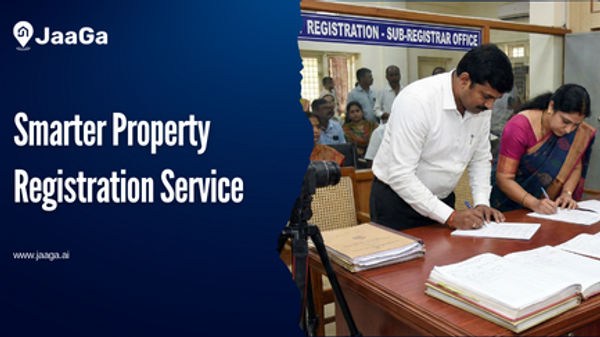
Buying property is one of the most significant investments in a person’s life. Yet, the registration process can often feel like a maze of paperwork, legal jargon, and endless waiting. This is where JaaGa Property Registration Services steps in — providing a one-stop, online registration solution designed to simplify and streamline the entire process.
.jpg?tr=w-600,q-80,f-auto)
Learn what 7 12 Maharashtra land records are, how to check 7 12 online Maharashtra, understand satbara utara Maharashtra, Bhunaksha maps, Ferfar, 8A extract, and how Maharashtra land records work together for safe property transactions.
.jpg?tr=w-600,q-80,f-auto)
Discover how JaaGa automates banking due diligence, eliminates manual verification, accelerates APF and mortgage checks, and delivers fast, accurate property intelligence.
Get accurate, certified property valuation in Hyderabad. Residential, commercial & land valuation for loans, sale, purchase, and legal purposes. Fast & reliable.
.png?updatedAt=1761916011550&tr=w-600,q-80,f-auto)
Mutation is the process of changing the title of a property in the revenue records after it has been sold, inherited, or transferred. In Telangana, the mutation process ensures that the new owner's name is officially registered in government records, allowing them to pay property tax and establish legal ownership.
.png?updatedAt=1758529773318&tr=w-600,q-80,f-auto)
Owning property is one of the biggest financial and emotional investments in India. But proving legal ownership of a property can often be confusing, especially when disputes, missing documents, or unclear records are involved.